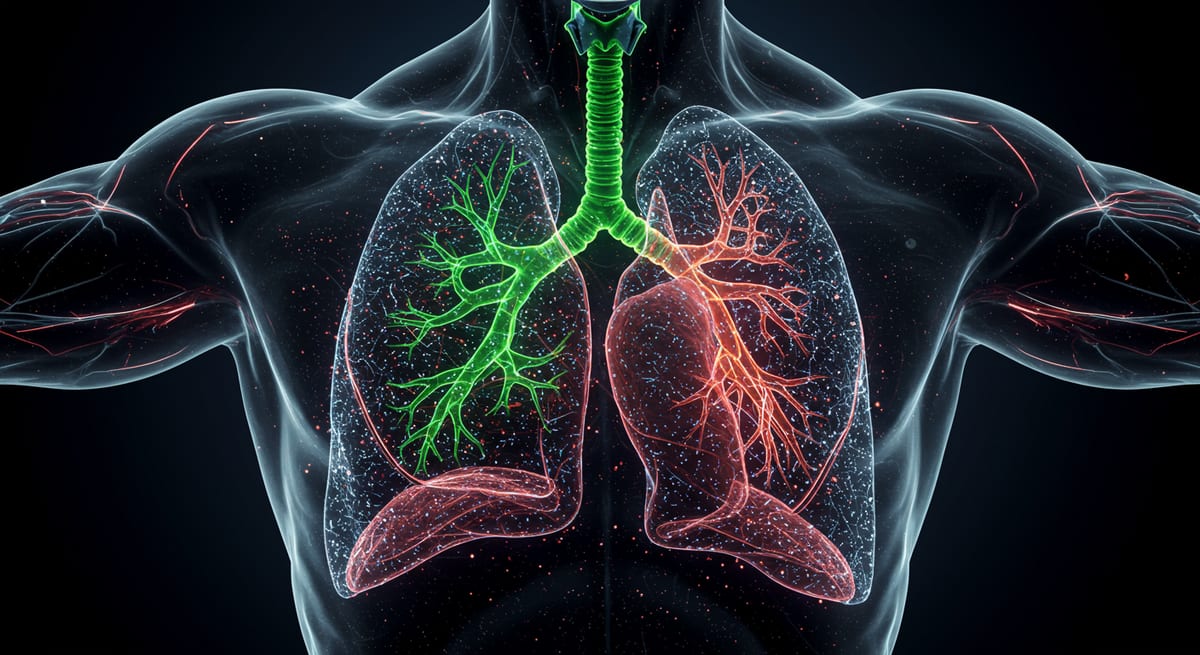
VO2 Max: What Is a Good Score, and How to Raise It: The Short Answer
VO2 max is the maximum rate at which your body can consume oxygen during peak exercise, measured in mL/kg/min. For endurance athletes it is the single best predictor of race performance because it sets your aerobic ceiling, defines training zones, and determines how long you can hold race pace. Elite endurance athletes typically score 70 to 85 mL/kg/min; recreational athletes 35 to 50. Roughly 50% is genetic, 50% trainable through high-intensity intervals.
The Ultimate
VO2 Max Stack
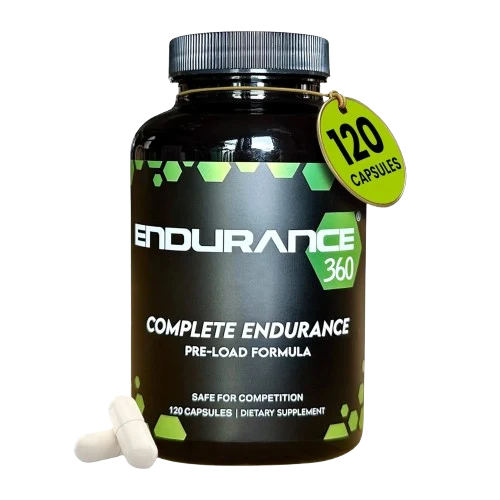
- Acute Nitric Oxide Vasodilation
- Chronic Lactic Acid Buffering
- Stimulant Free, cGMP Certified Manufacturing
Are you born with a high or low VO2 Max?
In this article:
-
What is VO2 Max?
-
Importance of VO2 Max for endurance athletes
-
Can VO2 Max be trained and improved?
-
Tips for improving VO2 Max
VO2 max is the maximum rate at which your body can consume and use oxygen during peak exercise, measured in milliliters of oxygen per kilogram of body weight per minute (mL/kg/min). It is the single strongest lab predictor of endurance performance, and research puts the genetic contribution at roughly 50%, meaning the other half is trainable.
Remember when you were young and some kids could run fast for miles and miles? You knew you didn't stand a chance racing them. They just seemed to have another level of cardiorespiratory fitness. You just had to go at your own pace. It's likely those fast-running kids had a higher VO2 max.
Poole DC, Jones AM. J Appl Physiol (2017): VO2max provides a quantitative measure of cardiorespiratory endurance fitness. It reflects the integrated capacity of the pulmonary, cardiovascular, and muscular systems to uptake, transport, and utilize oxygen during maximal exercise.
What's VO2 Max? How To Calculate Your VO2 Max
VO2 max is reported two ways: relative VO2 max (mL/kg/min), which is what gets compared between athletes, and absolute VO2 max (mL/min or L/min), which is relative VO2 max multiplied by body weight in kilograms. A 70 kg athlete with a relative VO2 max of 50 mL/kg/min is consuming 3,500 mL, or 3.5 liters, of oxygen per minute at peak effort.
- Relative VO2 max (mL/kg/min): the number used to compare fitness across athletes of different sizes; this is what training-zone calculators and race predictors use.
- Absolute VO2 max (mL/min): relative VO2 max times body weight in kilograms; useful for comparing raw aerobic engine size regardless of body weight.
- Example: 70 kg athlete, relative VO2 max of 50 mL/kg/min, absolute VO2 max = 70 x 50 = 3,500 mL/min (3.5 L/min).
In a nutshell, VO2 max is the maximum rate of oxygen consumption by the body during exercise. The more oxygen your body absorbs and uses per minute relative to your body weight, the higher your VO2 max.
Verywellfit: VO2 max is measured in milliliters of oxygen used in one minute per kilogram of body weight (mL/kg/min). It is based on the premise that the more oxygen athletes consume during high-level exercise, the more the body will generate adenosine triphosphate (ATP) energy in cells. ATP is often referred to as the "molecular unit of currency" of intracellular energy.
The VO2 max test measures how much oxygen your body uses during physical activity. This helps determine how hard you should push yourself to achieve optimal results. Interestingly, heart rate is not necessarily correlated: two athletes can share a max heart rate and still have very different oxygen consumption capacities.
Runners World: When the test was examined against laboratory trials, in which the subjects' oxygen intake and carbon dioxide output were measured using a mask and accurate instruments.
Oxygen is like gasoline on a fire. The more oxygen you distribute to your muscles, the more your muscles can continue to provide power output.
Measuring VO2 max precisely requires specialized lab instruments and a metabolic mask; consumer devices now offer a usable field estimate. Garmin's wrist-based VO2 max estimate lands within roughly 3.5 mL/kg/min of laboratory values about 95% of the time, close enough to track training trends even though it is not a lab-grade number.
Marathon Handbook: After comparing the Garmin VO2 max estimates with each runner's laboratory values, results demonstrated that Garmin's VO2 max estimation was 95% correct, with a margin of error of less than 3.5ml/kg/min.
LIMITER_DIAGNOSTIC
What Breaks First in Your Races?
Pick the failure mode you know best:
Can I Train and Improve VO2 Max?
VO2 max is trainable but genetics set the ceiling: most research attributes about 50% of your VO2 max to inherited factors, with the remainder responsive to structured training, particularly high-intensity intervals near or above your anaerobic threshold. This is distinct from oxygen economy, the amount of oxygen your body needs to sustain a given pace, which keeps improving well after VO2 max itself plateaus.
To become a top-end marathon runner, a Tour De France winner, or the Ironman World Champion you will need a high VO2 max and superior aerobic fitness. In other words, to be among the very best endurance sports athletes, VO2 max is a prerequisite.
CNET: You might not be too surprised to learn that high-intensity interval training is one of the best ways to improve your VO2 max. It works because you train your body to work at incredibly high levels for a period of time just long enough to push or surpass your anaerobic threshold before returning to a steadier, aerobic state.
VO2 Max vs. Oxygen Economy: Not the Same Thing
Raising VO2 max means increasing the ceiling on how much oxygen your body can consume; improving oxygen economy means using less oxygen to sustain the same pace, which is a separate adaptation that keeps progressing long after VO2 max stalls. This distinction matters for supplementation: dietary nitrate from beetroot has repeatedly been shown to reduce the oxygen cost of submaximal exercise by roughly 1 to 3%, without necessarily changing VO2 max itself. In practice that means an athlete can hold the same VO2 max number on a retest while still running or riding faster at threshold, because less oxygen (and therefore less metabolic cost) is required to hold that pace. Pair a measured VO2 max with the site's threshold zones tool to translate the number into actual training paces and heart-rate targets, since the raw VO2 max figure by itself does not tell you what pace to train at.
Should I try to Improve My VO2 Max?
Yes: VO2 max is trainable at every fitness level, from a sedentary beginner to an elite racer, though the size of the gain shrinks as you get fitter. A previously sedentary adult can see VO2 max jump substantially within months of consistent aerobic training, while an already-elite athlete may gain only a small fraction more even with years of dedicated work.
From a good athlete, to an elite athlete, the oxygen uptake or VO2 max improvements are likely to be small. Most of the remaining gains at that level come from oxygen economy and race-specific pacing rather than the VO2 max number itself.
Healthline: Everyone, no matter their athletic ability, should try to increase their cardiorespiratory endurance. According to research, a higher VO2 max is associated with a lower risk of death.
Mens Journal and Running coach Elizabeth Corkum: "The better you are at using oxygen, the faster and/or longer you'll be able to run."
It is a measure of your aerobic capacity and physical fitness, and is influenced by genetics and age.
Tips for improving VO2 max:
- Engage in regular aerobic training such as running, cycling, or swimming.
- Vary your workouts to include high-intensity interval training (HIIT) and long, steady-state endurance exercise.
- Increase the intensity of your training workouts gradually, rather than trying to do too much too soon.
- Incorporate strength training into your fitness routine, as it can help improve your VO2 max and make you a more efficient runner or cyclist.
- Maintain a fit-level weight and body composition.
You will still need to put in hard work and train for years to reach your full athletic potential.
How you distribute that intensity across a training week, mostly easy aerobic volume with hard spikes versus a gradual pyramid toward threshold, shapes the adaptation as much as the total hours do. See polarized vs periodization training for how the two models compare and which one fits your current phase. To see how a higher oxygen ceiling translates into projected finish times, run your numbers through the performance calculator.
"Some of us get to compete among the best in the world, the rest of us get to watch." -Cameron Hoffman
Professional Athletes VO2 Max Numbers
Elite endurance athletes typically post VO2 max scores of 70 to 85 mL/kg/min, roughly double the average untrained adult's 40 to 45 mL/kg/min, and the handful of recorded scores above 90 mL/kg/min belong almost exclusively to elite cross-country skiers and cyclists. Most professional athletes keep physiological testing private, so the numbers below are the ones that have become public record rather than a full census of the field.
Garmin.com: On average, men have higher VO2 max values than women. So for a man and woman with the same VO2 max, the woman will have a better fitness level compared to her peer group.
A top female endurance athlete will almost certainly have a much higher VO2 max than the average male. However, she will likely have a lower VO2 max compared to a top male endurance athlete.
Who Has the Highest VO2 Max?
Forbes Health Dr. Goldberg says, "Testing your VO2 max is best used by elite athletes to know if they will have what it takes to compete at a certain level."
Some of this information is tough to obtain. Professional and elite athletes don't often offer or promote their personal physiological and cardiovascular fitness attributes.
Two American athletes recorded some of the highest VO2 max numbers ever measured: three-time Tour de France winner Greg LeMond (92.5 mL/kg/min) and running phenomenon Steve Prefontaine (84.4 mL/kg/min).
Michael Konczar: The four times Tour de France winner, Christopher Froome, has a VO2max of 84.6 ml / (kg . min), for example. Miguel Indurain once had a figure of 88.0 ml / (kg . min).
Ironman professionals and Nordic skiers consistently post world-class VO2 max values.
What Is a Good VO2 Max Benchmark by Level?
Benchmark ranges run from about 40 mL/kg/min for an average untrained adult male up to 90+ mL/kg/min for the handful of athletes who have ever recorded the highest scores on record, with Tour de France-caliber riders typically clustering between 76 and 82 mL/kg/min.
| Athlete tier | Typical VO2 max (mL/kg/min) |
|---|---|
| Average untrained male | ~45 |
| Recreational endurance athlete | 35 to 50 |
| Competitive amateur | 50 to 60 |
| Sub-elite endurance athlete | 60 to 70 |
| Tour de France-caliber rider | 76 to 82 |
| Elite endurance athlete (general) | 70 to 85 |
| Highest-ever recorded scores | 90 to 97.5 |
Alaskan huskies bred for sled racing have been measured at VO2 max values approaching 200 mL/kg/min, a reminder of how much variation exists across species even though the human numbers above already represent the extremes of our own physiology.
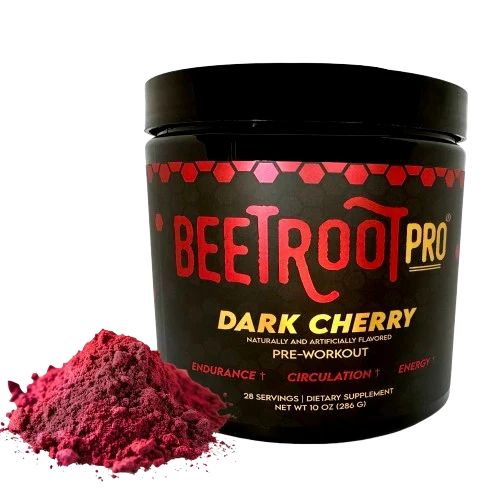
Dietary nitrate from Beetroot Pro® has been studied for its effect on oxygen uptake and the oxygen cost of exercise; see the nitric oxide and athletic performance breakdown for the underlying mechanism and dosing evidence.
Highest Recorded VO2 Max Values on Record
The highest laboratory-recorded VO2 max scores belong to Nordic skiers and track cyclists, topping out at 97.5 mL/kg/min for an 18-year-old Norwegian cyclist tested in 2012; the women's record sits at 78.6 mL/kg/min, held by 1984 Olympic marathon champion Joan Benoit. Data below via Topendsports.
Men's highest recorded VO2 max:
| Score | Name | Sport | Notes |
|---|---|---|---|
| 97.5 | Oskar Svendsen | Cycling | 18 year old from Lillehammer, Norway; tested Sept 2012 at the University College of Lillehammer. |
| 96.0 | Espen Harald Bjerke | Cross country skiing (Norway) | Achieved in 2005 (7.3 L/min, 76 kg body weight). |
| 96.0 | Bjorn Daehlie | Cross country skiing (Norway) | Commonly quoted figure, though another source lists a best of 90 mL/kg/min. |
| 93.9 | Brett Aitken | Track cycling (Australia) | Recorded at the South Australian Institute of Sport in 1991. |
| 93.0 | Kurt Asle Arvesen | Road cycling (Norway) | Professional road cyclist for Team Sky, figure dated to 1997. |
| 92.5 | Greg LeMond | Cycling (USA) | Three-time Tour de France winner. |
Women's highest recorded VO2 max:
| Score | Name | Sport | Notes |
|---|---|---|---|
| 78.6 | Joan Benoit | Distance running | 1984 Olympic marathon champion. |
| 76.6 | Bente Skari | Cross country skiing | |
| 76.0 | Flavia Oliveira | Cycling (Brazil) | Road cyclist and climbing specialist, tested January 2012. |
| 74.0 | Charlotte Kalla | Cross country skiing | Achieved at only 20 years of age. |
| 72.0 | Marit Bjoergen | Cross country skiing | |
| 72.0 | Toini Ronnlund | Cross country skiing | Achieved in the 1960s. |
| 71.2 | Ingrid Kristiansen | Distance running | Former marathon world record holder. |
| 67.2 | Rosa Mota | Distance running | 1984 Olympic marathon bronze, 1988 Olympic marathon champion. |
Beetroot powder extract, the active ingredient in Beetroot Pro®, has been shown to improve circulation and oxygen uptake in endurance athletes.
Related Reading
Dial in your race pacing and fueling once you know your VO2 max and threshold zones with these related tools and guides. Use the race blueprint tool to turn your physiology into a race-day pacing and fueling plan, and check the FAQ for questions on supplement timing and compliance.
- Runner's Blueprint
- World's Best VO2 Max Scores, Topend Sports
- Barker, Jill. Fitness: Tour de France cyclists among the world's fittest athletes. Montreal Gazette
- Abbott, Marc. "How to Train Your Vo2 Max." Cycling Weekly
It is recommended to consult with a healthcare professional before taking any dietary supplement, especially if you have any medical condition, pregnancy, breastfeeding, or are on any medication.
FDA Disclaimer: These statements have not been evaluated by the Food and Drug Administration. This product is not intended to diagnose, treat, cure, or prevent any disease.
Maximize your results: Learn how to stack your nutrition for peak performance in our VO2 Max Supplements Guide.
Technical FAQ Extension
Why does VO2 max matter for endurance performance?
VO2 max is the ceiling on your aerobic engine. It sets the upper bound on sustained power output because no pace above it can be maintained aerobically. A higher VO2 max allows you to run faster at a given percentage of max effort, recover faster between intervals, and sustain threshold pace longer before accumulating fatigue. Improving VO2 max is one of the highest-leverage training adaptations for endurance athletes.
Can supplements increase VO2 max?
No supplement increases the VO2 max ceiling in already-trained athletes. However, dietary nitrate (beetroot) reduces the oxygen cost of exercise at submaximal intensities, effectively raising the functional power output achievable at the same oxygen consumption. This is an efficiency gain, not a ceiling increase. Training volume, interval quality, and altitude exposure are the primary drivers of VO2 max improvement.
What is a good VO2 max for an endurance athlete?
Elite male endurance athletes typically range 70 to 90 mL/kg/min. Elite females range 60 to 80 mL/kg/min. Recreational endurance athletes typically fall in the 40 to 55 range. What matters more than the absolute number is your lactate threshold as a percentage of VO2 max, and your oxygen efficiency (how much output you generate per unit of oxygen consumed).
Continue reading
Related Articles
Apr 13, 2026
What Limits the Stamina of Endurance Athletes?
Endurance is limited by four systems: oxygen delivery, lactate clearance, glycogen, and central fatigue. What each one does and how to train around them.
Apr 13, 2026
Why Endurance Athletes Need More Carbohydrate
Carbohydrate is the limiting fuel for endurance. Why glycogen runs the show, grams per hour by duration, and how to train your gut to take more.
Jun 2, 2026
Best Supplements for Energy in Endurance Athletes
The best energy supplements for endurance athletes: dietary nitrate, caffeine, creatine, and beta-alanine. Different mechanisms that stack cleanly.
The Ultimate
VO2 Max Stack
- Acute Nitric Oxide Vasodilation
- Chronic Lactic Acid Buffering
- Stimulant Free, cGMP Certified Manufacturing
*Technical citations and PubMed references are provided for performance education only. These statements have not been evaluated by the FDA.