
Best Supplements for Energy in Endurance Athletes: The Short Answer
The most evidence-backed energy supplements for endurance athletes are: dietary nitrate (300 to 600mg, raises nitric oxide for better oxygen delivery), caffeine (3 to 6mg/kg, central nervous system stimulant), creatine monohydrate (3 to 5g daily, ATP regeneration for repeated high-intensity efforts), and beta-alanine (3.2 to 6.4g daily, buffers lactic acid). These four work through distinct mechanisms and stack without interaction. None require a stimulant stack for the endurance-specific effect.
Energy is the most searched word in sports nutrition, and also the most misused. For a general-population consumer, "energy" usually means a stimulant hit from caffeine or sugar. For an endurance athlete, energy means something more specific: sustained aerobic output over one to six hours without early fade, without GI distress, and without crashing at mile 80 of a century ride.
That distinction matters because the supplement industry sells the same energy products to both audiences. Most pre-workout blends are built around caffeine, taurine, and sugar, which serve a 45-minute gym session adequately but fall apart in a four-hour race. This guide focuses only on compounds with peer-reviewed evidence for endurance-specific energy: oxygen delivery, ATP regeneration, lactate buffering, and sustained output.
What Are the Best Energy Supplements for Endurance Athletes?
The best energy supplements for endurance athletes address four distinct mechanisms: oxygen delivery (dietary nitrate), ATP regeneration (creatine), lactic acid buffering (beta-alanine), and central nervous system activation (caffeine). Adaptogens like cordyceps and rhodiola support chronic energy over weeks. Each mechanism is independent, so stacking them is additive rather than redundant.
The table below maps each compound to its mechanism, evidence quality, and timing requirements.
| Supplement | Mechanism | Evidence Level | Timing |
|---|---|---|---|
| Dietary nitrate (beetroot) | Nitrate-to-nitric oxide: reduces oxygen cost of exercise | Strong (30+ RCTs) | 60 to 90 min pre-exercise |
| Caffeine | Adenosine receptor antagonist: reduces perceived effort | Strong (gold standard in sports nutrition) | 45 to 60 min pre-exercise |
| Creatine monohydrate | Phosphocreatine resynthesis: ATP for high-intensity surges | Strong (200+ RCTs across sports) | Daily, any time (loading required) |
| Beta-alanine | Raises muscle carnosine: buffers H+ accumulation | Moderate-strong (1 to 4 min efforts) | Daily, split doses (4+ week load) |
| Cordyceps extract | Supports ATP production and oxygen utilization | Moderate (emerging RCTs) | Daily, chronic use |
| Rhodiola rosea | Reduces cortisol and perceived exertion | Moderate | Daily, chronic use |
| B vitamins (B12, B6) | Cofactors for energy metabolism and red blood cell production | Foundational (deficiency correction) | Daily |
| Iron | Oxygen transport via hemoglobin | Critical if deficient (not a booster for replete athletes) | Under medical guidance |
"Energy" supplements that rely solely on caffeine and sugar are not covered here. They produce acute arousal but do not improve aerobic efficiency, lactate threshold, or oxygen delivery. The compounds above work through the mechanisms that determine endurance performance. For the broader picture, including the foundational nutrients that support recovery, see our ranked guide to the top supplements for endurance athletes.
Dietary Nitrate: The Most Targeted Energy Supplement for Aerobic Sport
Dietary nitrate raises plasma nitric oxide levels, which dilates blood vessels, improves oxygen delivery to working muscle, and reduces the oxygen cost of a given power output by 1 to 3%. That means the same watts or pace requires less aerobic effort. The effect is most pronounced at moderate intensities, making it directly relevant to endurance racing rather than short-burst sport.
Nitrate works via a specific pathway: inorganic nitrate from food or supplementation is converted to nitrite by oral bacteria, then reduced to nitric oxide under the acidic, low-oxygen conditions in working muscle. Nitric oxide relaxes smooth muscle in vessel walls, increasing blood flow and oxygen delivery at the cellular level.
The relevant dose range is 300 to 600mg of dietary nitrate, taken 60 to 90 minutes before exercise. Whole beets and beet juice contain roughly 250 to 400mg per serving, with significant variability by growing conditions. Standardized supplements using patented betaine nitrate (NO3-T) deliver a fixed dose, which is essential for race-day reliability.
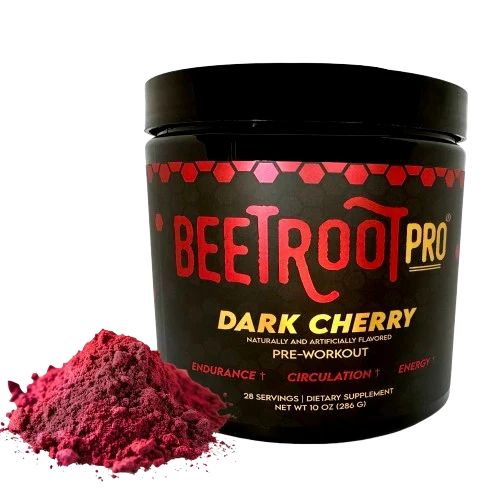
Beetroot Pro® provides 1,400mg of NO3-T betaine nitrate per serving, yielding 400-500mg of dietary nitrate and exceeding the threshold dose used in most published RCTs. It contains no added sugar, no stimulants, and no artificial colors. At $49.95 for 28 servings ($1.78 per serving), it is designed for daily pre-training use as well as race-day protocol. Take it 60 to 90 minutes before your first pedal stroke or mile.
One practical note: avoid antibacterial mouthwash in the 2 hours before and after taking nitrate. The conversion from nitrate to nitrite depends on oral bacteria. Mouthwash eliminates those bacteria and substantially blunts the plasma nitrite response. This is one of the most commonly missed factors in athletes who report no effect from beet products.
For drug-tested athletes who require NSF Certified for Sport batch verification, Momentous Beet is the main alternative in this category. It is a legitimate option for that use case. The tradeoff is a higher cost per serving and a different nitrate source (beet extract rather than betaine nitrate). See a full comparison of dose, certification, and price.
Disclosure: some product links below are affiliate links. Beetroot Pro may earn a commission if you purchase through them, at no additional cost to you. We only link products that match the evidence in this article.
Caffeine: What the Evidence Actually Says
Caffeine at 3 to 6mg per kilogram of body weight, taken 45 to 60 minutes before exercise, consistently improves endurance time-trial performance by 1 to 3% and reduces perceived exertion at a given intensity. It works by blocking adenosine receptors in the brain, reducing the subjective sense of fatigue. It is the most studied ergogenic aid in sports nutrition history.
For a 70kg athlete, the evidence-based dose range is 210 to 420mg, which corresponds to roughly 2 to 4 cups of coffee or a single concentrated caffeine supplement. The lower end of that range (200 to 250mg) captures most of the performance benefit while substantially reducing the risk of GI distress and anxiety, which are common at higher doses. For precise dosing without the variability of coffee, caffeine pills at 100mg each let you titrate to your body weight in clean increments.
Several considerations are worth noting for endurance athletes specifically. First, tolerance develops within days of consistent daily use. Athletes who use caffeine every morning may need to cycle off for 5 to 7 days before a target event to restore full receptor sensitivity. Second, caffeine is a diuretic at rest, but this effect is largely negated during exercise in hydrated athletes. Third, genetic variation in CYP1A2 (the enzyme that metabolizes caffeine) creates genuine responders and non-responders. Some athletes find caffeine essential for performance; others find it destabilizing.
For race-day use, many experienced endurance athletes time caffeine strategically rather than consuming it pre-race: deferring the first dose to 90 to 120 minutes into a long event can extend the window of benefit into the back half of a race.
Creatine for Endurance Athletes: More Than a Strength Supplement
Creatine monohydrate accelerates the regeneration of phosphocreatine, the immediate fuel for maximal-effort contractions lasting 1 to 10 seconds. For endurance athletes, this translates to better performance in high-intensity surges: sprint finishes, steep climbs, criterium accelerations, and VO2 max intervals. A loading phase of 5g taken four times daily for 5 to 7 days, followed by 3 to 5g daily maintenance, fully saturates muscle stores.
The application to pure endurance events is narrower than to strength sport, but the signal is real. Creatine does not improve submaximal aerobic output directly. It improves the body's ability to recover between repeated high-intensity efforts within an aerobic event. In a road race with multiple short climbs, or a triathlon with a competitive swim-to-bike transition, creatine's benefit is measurable.
One commonly mentioned side effect is a 1 to 3% body weight increase, which is intracellular water retention in muscle tissue. This is not fat gain or edema. For weight-sensitive athletes (climbers, masters racers managing power-to-weight ratio), this should be factored into race-week decisions. For most endurance athletes, the strength and recovery benefit outweighs the minor weight change.
There is also a well-documented cognitive benefit from creatine supplementation: faster reaction time and reduced mental fatigue. In events requiring navigation, pacing judgment, or tactical decisions over multiple hours, this is not trivial.
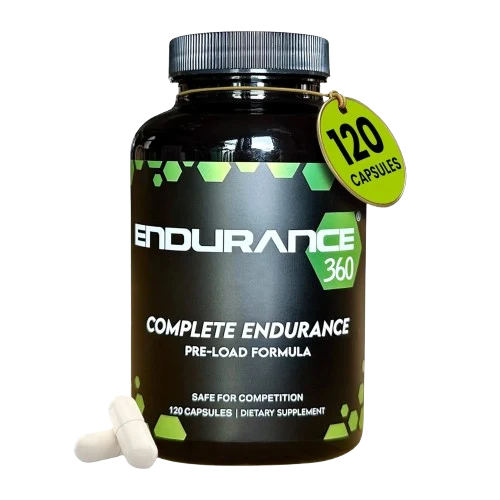
Endurance360® contains creatine monohydrate as part of its multi-compound formula. Because creatine requires consistent daily dosing to maintain saturation, it fits naturally in a daily supplement taken at a fixed time rather than as a pre-workout. Endurance360® is designed for exactly this: compounds that build over time rather than spike acutely.
Beta-Alanine and Lactic Acid Buffering
Beta-alanine supplementation raises muscle carnosine concentrations over 4 to 6 weeks of daily use, and carnosine is the primary intramuscular buffer against hydrogen ion accumulation during intense exercise. This delays the onset of the burning sensation and performance decline during efforts lasting roughly 1 to 4 minutes, which includes threshold intervals, steep climbs, and final race kicks. The effective dose is 3.2 to 6.4g daily.
Carnosine buffers H+ ions that accumulate as lactic acid dissociates during high-intensity anaerobic work. As hydrogen ion concentration rises, muscle pH drops and contractile function deteriorates. Beta-alanine raises the buffering capacity so that more work can be done before this threshold is reached.
The specificity of the time window (1 to 4 minutes of intense effort) is important for setting expectations. Beta-alanine does not improve easy-pace aerobic output. It delays the fade during the hardest efforts embedded in an otherwise aerobic event. For athletes who race criteriums, do threshold intervals, or compete in events with decisive climbs, the benefit is well-supported. For pure ultra-endurance athletes racing at moderate aerobic intensities, the benefit is narrower.
A characteristic side effect is paresthesia, a harmless tingling sensation in the face, hands, and extremities that occurs roughly 30 to 60 minutes after a dose. It is caused by beta-alanine binding to sensory receptors in the skin. Splitting the daily dose across two to three meals substantially reduces the intensity of paresthesia. It does not indicate any adverse effect and diminishes with continued use as the body adapts.
Endurance360® includes beta-alanine as a core compound, formulated to support the 4-week minimum loading period required before the carnosine pool is meaningfully elevated.
Adaptogens: Cordyceps and Rhodiola for Sustainable Energy
Cordyceps sinensis and rhodiola rosea are adaptogenic compounds that support energy over weeks of chronic use rather than acutely on a single day. Cordyceps appears to support oxygen utilization and ATP production; rhodiola reduces the cortisol response to training stress and lowers perceived exertion at submaximal intensities. Neither is a stimulant and neither produces the acute effect that caffeine or nitrate does.
Cordyceps research has focused on its potential to support mitochondrial ATP synthesis and improve maximal oxygen uptake. A 2010 study published in the Journal of Alternative and Complementary Medicine found improved VO2 max in older adults after cordyceps supplementation. Training adaptation in fit endurance athletes is less dramatic, but the available data supports a modest benefit in oxygen utilization, particularly under hypoxic stress (altitude training, early-season base building).
Rhodiola rosea operates through a different axis: stress hormone modulation. Multiple RCTs have shown reductions in salivary cortisol and ratings of perceived exertion during exercise in rhodiola-supplemented athletes. Over a heavy training block, chronically elevated cortisol contributes to overtraining symptoms, poor sleep quality, and suppressed immune function. Rhodiola's role is not to produce a performance spike but to keep the physiological cost of heavy training lower so adaptation accumulates faster.
Endurance360® contains both cordyceps extract and rhodiola rosea extract alongside the other active compounds in its formula. Because adaptogens act on chronic stress and recovery pathways, they are most effective when taken consistently over a training block of 4 to 12 weeks rather than as a one-time supplement.
Vitamins and Minerals That Affect Energy Levels
B vitamins (B12, B6, folate) are essential cofactors for energy metabolism at the cellular level, including the Krebs cycle, red blood cell synthesis, and oxygen transport. Iron is critical for hemoglobin formation and oxygen delivery. Deficiencies in either cause measurable fatigue and performance decline, but supplementing beyond adequacy does not boost energy in athletes who are already replete.
This distinction is foundational. Vitamins and minerals that affect energy are not ergogenic aids in the same sense as nitrate or creatine. They are prerequisites. An athlete who is B12-deficient will experience fatigue, poor recovery, and reduced aerobic capacity, and correcting that deficiency will restore normal function. But an already-replete athlete adding extra B12 will not see a further performance lift.
B12 is particularly relevant for endurance athletes who follow plant-based or largely plant-based diets. B12 is found almost exclusively in animal products. Even athletes who eat some animal protein often run marginal B12 levels. Beetroot Pro® includes B12 in its formula alongside the nitrate dose, supporting both the energy metabolism pathway and the red blood cell production cycle that makes oxygen transport possible.
Iron deficiency is more common in female endurance athletes and in high-mileage runners due to foot-strike hemolysis. The correct intervention is iron repletion under medical guidance, not over-the-counter iron supplementation without testing. Serum ferritin below 30 ng/mL in an endurance athlete is associated with measurable performance decline. The fix is diet and medically supervised supplementation, not a higher dose of a general supplement.
Magnesium supports over 300 enzymatic reactions, including those involved in ATP synthesis and muscle contraction. It is commonly depleted through sweat in endurance athletes. Low magnesium manifests as muscle cramps, poor sleep, and increased perceived exertion. Endurance360® is not an electrolyte product and does not carry a dosed magnesium amount, so magnesium is worth sourcing separately; what Endurance360® covers is the loading layer that sits alongside it, beta-alanine and creatine for buffering and ATP resynthesis.
How to Stack Energy Supplements Without Overstimulating
Dietary nitrate, creatine, beta-alanine, and adaptogens are all stimulant-free. They stack cleanly with caffeine and with each other because they operate through independent mechanisms. An athlete using all four simultaneously is not additive in risk, only in benefit, provided doses stay within evidence-based ranges. The practical concern is GI load, not physiological conflict.
Here is a practical framework for endurance athletes building a complete energy supplement stack:
| Compound | Product | Timing | Stimulant? |
|---|---|---|---|
| Dietary nitrate (1,400mg NO3-T, 400-500mg yield) | Beetroot Pro® | 60 to 90 min pre-training | No |
| Creatine monohydrate | Endurance360® | Daily, any time | No |
| Beta-alanine | Endurance360® | Daily, split doses | No |
| Cordyceps + Rhodiola | Endurance360® | Daily, chronic use | No |
| Caffeine | Personal choice (coffee, gel, etc.) | 45 to 60 min pre-race | Yes |
Beetroot Pro® and Endurance360® are designed to work together as a complete stimulant-free energy stack. Beetroot Pro® handles the acute aerobic energy pathway (nitrate, nitric oxide, oxygen delivery). Endurance360® handles the chronic adaptation pathways (creatine saturation, carnosine loading, adaptogen accumulation). Together they address both the race-day acute effect and the training-block chronic adaptation that builds the capacity to use that effect.
Caffeine can be layered on top for races or key training days. Because neither BRP nor E360 contains caffeine, athletes retain full control over their stimulant intake, including the ability to taper caffeine before target events to restore receptor sensitivity.
The Early Breakaway Pack (1 canister of Beetroot Pro® + 2 canisters of Endurance360®, $109.95) bundles the complete stack at a savings versus buying separately. It is sized to give enough E360 to complete a full 4-week loading phase on creatine and beta-alanine while running BRP as a daily pre-training supplement.
The Ultimate
VO2 Max Stack
- Acute Nitric Oxide Vasodilation
- Chronic Lactic Acid Buffering
- Stimulant Free, cGMP Certified Manufacturing
Frequently Asked Questions
What is the best supplement for energy without caffeine? Dietary nitrate (from beetroot or standardized supplements like Beetroot Pro®) is the most evidence-backed stimulant-free energy supplement for endurance athletes. It reduces the oxygen cost of exercise by 1 to 3%, meaning less aerobic effort is required at a given pace or power output. Creatine and beta-alanine are also stimulant-free and support energy in different contexts (high-intensity surges and lactate buffering, respectively).
Do vitamins give you energy? B vitamins are essential cofactors for energy metabolism and will restore normal energy function if you are deficient. However, supplementing B vitamins above adequacy does not boost energy in athletes who already have sufficient levels. If you consistently feel fatigued despite adequate sleep and training load, a B12 and iron panel is a reasonable first step to rule out deficiency before reaching for a pre-workout supplement.
How long does it take for energy supplements to work? It depends on the compound. Caffeine and dietary nitrate produce effects within 45 to 90 minutes of ingestion. Creatine requires 5 to 7 days of loading at 20g daily (split into four 5g doses) or 4 weeks at 3 to 5g daily before muscle stores are fully saturated. Beta-alanine requires 4 to 6 weeks of daily dosing before carnosine levels are meaningfully elevated. Adaptogens like cordyceps and rhodiola show measurable effects at 4 to 12 weeks.
Can I take beetroot and creatine together? Yes. Dietary nitrate and creatine work through completely independent mechanisms and there is no known interaction between them. One supports oxygen delivery via nitric oxide; the other supports ATP regeneration via phosphocreatine. Stacking them is additive. Beetroot Pro® and Endurance360® (which contains creatine monohydrate) are specifically designed to be used together.
FDA Disclaimer: These statements have not been evaluated by the Food and Drug Administration. This product is not intended to diagnose, treat, cure, or prevent any disease.
Go deeper: See how these compounds interact with oxygen delivery in our VO2 Max Supplements Guide, or calculate your exact pre-race nitrate timing with the Performance Lab tools.
Continue reading
Related Articles
Jun 3, 2026
Best Leg Cramp Supplements for Endurance Athletes
The 5 supplements that prevent leg cramps: magnesium, potassium, beta-alanine, creatine, and taurine, with clinical doses and loading timelines.

Jun 2, 2026
Best CoQ10 Supplements for Athletes (2026)
The best CoQ10 supplement for athletes is ubiquinol, 100 to 300mg daily with a fatty meal. Supports mitochondrial ATP and eases statin-related muscle fatigue.
Apr 13, 2026
Top 10 Endurance Supplements, Ranked by Evidence (2026)
The best endurance supplements, ranked by evidence tier: nitrate, creatine, beta-alanine, caffeine, plus foundational picks like iron and B12, with doses.
*Technical citations and PubMed references are provided for performance education only. These statements have not been evaluated by the FDA.