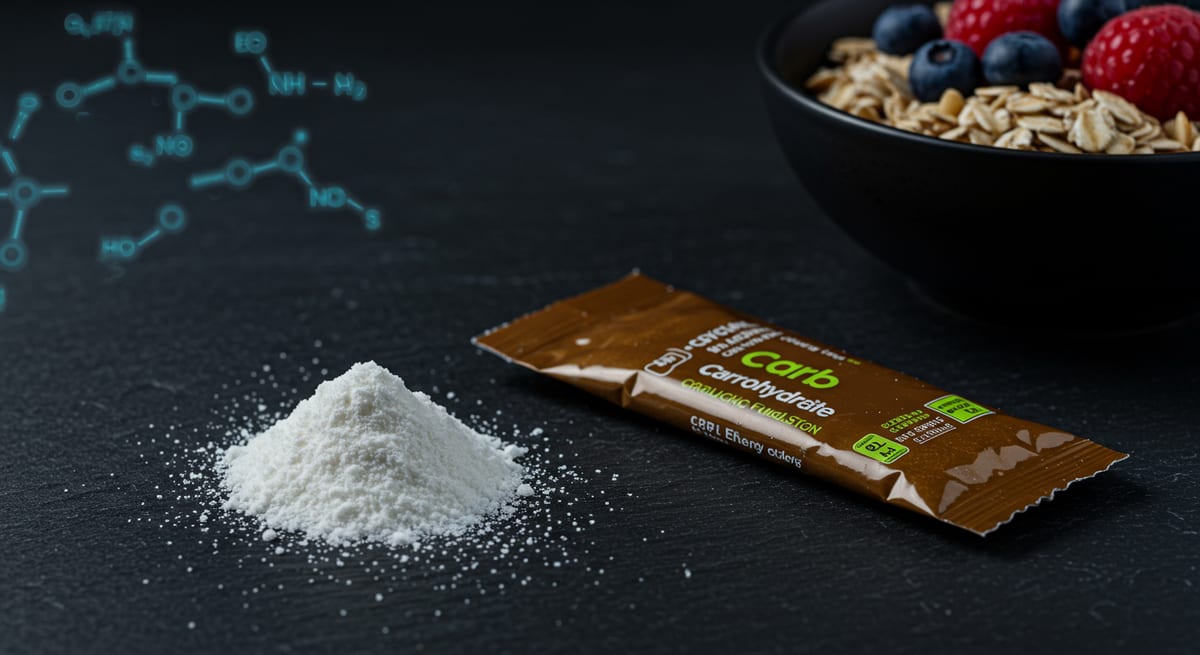
Why Endurance Athletes Need More Carbohydrate: The Short Answer
The core reason endurance athletes need more carbohydrate is that glycogen is the primary fuel for sustained effort, and depleting it forces the body to break down muscle and triggers the wall. During exercise, consume 30 to 60 g of carbohydrate per hour, rising to roughly 90 g/h for ultra-endurance events over 2 to 3 hours. Athletes also benefit from 200 to 300 g of carbohydrate 3 to 4 hours before an event, with daily intake around 6 to 10 g per kg of body weight.
The Ultimate
VO2 Max Stack
- Acute Nitric Oxide Vasodilation
- Chronic Lactic Acid Buffering
- Stimulant Free, cGMP Certified Manufacturing


Why Endurance Athletes Need More Carbohydrate
The core reason endurance athletes need more carbohydrate is that glycogen, the body's stored form of carbohydrate, is the primary fuel for sustained effort. Depleting it forces the body to break down muscle tissue for fuel and triggers the performance collapse athletes call "the wall." Carbohydrate is quickly digested, converted to glucose, and delivered to working muscle faster than fat or protein can supply comparable energy.
Endurance athletes, cyclists, runners, and triathletes push their bodies for hours at a stretch, and the body's carbohydrate stores are small relative to that demand: total muscle and liver glycogen typically covers only 90 to 120 minutes of moderate-to-hard effort before it needs active replacement. That single fact drives almost every carbohydrate recommendation in endurance sport.
How Much Carbohydrate You Need, by Context
Carbohydrate needs scale with training load and event duration: 6 to 10 g per kg of body weight daily to support training volume, 200 to 300 g in the 3 to 4 hours before an event to top off glycogen stores, and 30 to 60 g per hour during exercise, rising to roughly 90 g per hour for ultra-endurance events lasting 2 to 3 hours or more.
| Context | Carbohydrate Target |
|---|---|
| Daily intake (training days) | 6 to 10 g/kg body weight |
| Pre-event meal (3 to 4 hours out) | 200 to 300 g |
| During exercise (under 2.5 hours) | 30 to 60 g/hour |
| During exercise (ultra-endurance, 2.5+ hours) | Up to 90 g/hour |
| Post-exercise (first hour) | 1.0 to 1.2 g/kg/hour |
For a 72.6 kg (160 lb) athlete, the daily range works out to 435 to 726 g of carbohydrate. During exercise over an hour, a single carbohydrate source oxidizes at up to roughly 60 g/hour; ultra-endurance events benefit from a glucose-fructose blend using two intestinal transport pathways to push absorption toward 90 g/hour. For a personalized in-race target, use the carb fueling plan calculator.
RACE_DAY_READINESS
How Race-Ready Is Your Fueling Plan?
Question 1 of 4
Do you know your carbs-per-hour target?
Why Glycogen Is the Limiting Fuel
Glycogen availability is the dominant limiter in events lasting more than about two hours, more decisive than cardiovascular fitness alone once stores run low. When glucose becomes depleted, the body starts breaking down muscle tissue for fuel, and pace collapses regardless of training status, the classic marathon wall.
Carbohydrates are one of the three macronutrients (alongside protein and fat) the body uses for fuel, and they are the fastest to convert to usable energy: carbs are digested, broken into glucose, and transported to working muscle faster than fat can be mobilized at race intensities. During training, the body draws on glucose first, and once glycogen stores run low, it shifts toward breaking down muscle tissue to keep supplying fuel. This is also the core mechanism behind what limits the stamina of endurance athletes more broadly, glycogen is one of four physiological walls athletes eventually hit.
Carb Loading Before an Event
Carb loading, deliberately elevating carbohydrate intake in the days before a race, typically starts 3 to 4 days out for most endurance events and extends to 5 to 7 days for marathon-length or longer events, paired with reduced training intensity (tapering) so the extra carbohydrate goes toward glycogen storage rather than immediate fuel.
- Standard events: begin elevated carbohydrate intake 3 to 4 days before competition.
- Marathon, Ironman, and longer events: extend the loading window to 5 to 7 days, gradually increasing intake while tapering training volume.
- Pre-workout dose: roughly 3 to 4 g of carbohydrate per kg of body weight in the hours before a hard session or race.
Carbohydrate intake before and after exercise restores glycogen stores that are critical for prolonged effort; the pre-event meal should be high in carbohydrate, low in fat and fiber, and easy to digest.
Carbohydrate Sources: Simple, Complex, and In-Race
Simple carbohydrates (glucose, fructose, sucrose) are absorbed quickly for rapid energy and dominate sports drinks, gels, and chews; complex carbohydrates (potatoes, rice, pasta, whole grains) digest more slowly for sustained energy and dominate daily and pre-race meals. Most in-race fueling products blend both to maximize absorption rate.
| Carb Type | Examples | Best Use |
|---|---|---|
| Simple sugars (glucose, fructose, maltodextrin) | Sports drinks, gels, chews | During exercise, rapid energy |
| Starchy complex carbs | Rice, pasta, potatoes, bread | Daily meals, pre-race fueling |
| Whole-food natural sugars | Bananas, dates, grapes | Training snacks, race-day whole-food options |
If you'd rather build your own in-race fuel than buy pre-made gels, the DIY Energy Gel calculator outputs gram-exact recipes using the same dual-transport carb math that lets ultra-endurance athletes push toward 90 g/hour.
Post-Exercise Carbohydrate Intake
To maximize glycogen restoration after a hard session, consume 1.0 to 1.2 g of carbohydrate per kg of body weight per hour during the first several hours post-exercise, when the replenishment rate is highest. For a 68 kg athlete, that is roughly 68 to 82 g of carbohydrate per hour in the early recovery window.
The full mechanics of the post-exercise glycogen window, including why the "30-minute window" is real but smaller than commonly claimed, are covered in our post-workout carb fueling guide.
Should Endurance Athletes Try a Ketogenic Diet?
A ketogenic diet (high fat, very low carbohydrate) reduces muscle glycogen availability, which is a direct disadvantage for the glycogen-dependent efforts that define most endurance racing. Some research shows improved fat-oxidation efficiency for certain athletes at low intensity, while other research shows impaired performance in the higher-intensity efforts that depend on glycogen, so the evidence is mixed rather than a clear recommendation either way.
The impact varies by individual training history, nutrient intake, and the intensity profile of the target event. For most competitive endurance racing, where pace surges and finishing kicks depend on glycogen availability, a standard moderate-to-high carbohydrate approach remains the better-supported default.
The Bottom Line
Carbohydrate is the limiting fuel for endurance performance because glycogen stores are small relative to demand and deplete within 90 to 120 minutes of moderate-to-hard effort. Match intake to context: 6 to 10 g/kg daily for training, 200 to 300 g pre-event, 30 to 60 g/hour during exercise (up to 90 g/hour for ultra-endurance), and 1.0 to 1.2 g/kg/hour post-exercise for recovery.
Beetroot Pro® does not replace carbohydrate fueling, it addresses a separate limiter (oxygen delivery), but pairs naturally with a carbohydrate strategy since both target different physiological walls in the same event.
It is recommended to consult with a healthcare professional before taking any dietary supplement, especially if you have any medical condition, are pregnant, are breastfeeding, or are on any medication.
FDA Disclaimer: These statements have not been evaluated by the Food and Drug Administration. This product is not intended to diagnose, treat, cure, or prevent any disease.
Maximize your results: Learn how to stack your nutrition for peak performance in our VO2 Max Supplements Guide.
Technical FAQ Extension
What is the main reason endurance athletes need more carbohydrate?
Carbohydrates are the best fuel source for endurance performance. They are quickly digested and broken down into glucose, which is transported to the muscles and used as energy. During training the body relies on glucose as its primary fuel, and if glucose becomes depleted the body starts breaking down muscle tissue for fuel, so replacing carbs is a high priority.
How many carbs should I eat per hour during an endurance event?
Authoritative sources suggest consuming 30 to 60 grams of carbohydrate per hour (about 0.7 g/kg of body weight) during endurance workouts to maintain blood glucose, which matters most when an event lasts more than an hour. A single carbohydrate source oxidizes at up to roughly 60 g/h for 2 to 3 hour efforts, and ultra-endurance recommendations rise to around 90 g/h.
How much carbohydrate should I eat before a race, and how early?
Athletes seem to benefit from consuming 200 to 300 grams of carbohydrate 3 to 4 hours before the event, with a pre-event meal that is high in carbohydrate, non-greasy, and readily digestible. For carb loading, most endurance athletes start 3 to 4 days before competition, extending to 5 to 7 days for long-duration events like marathons or Ironman triathlons while reducing training intensity.
Continue reading
Related Articles

Apr 13, 2026
What Limits the Stamina of Endurance Athletes?
Endurance is limited by four systems: oxygen delivery, lactate clearance, glycogen, and central fatigue. What each one does and how to train around them.

Jun 2, 2026
Best Supplements for Energy in Endurance Athletes
The best energy supplements for endurance athletes: dietary nitrate, caffeine, creatine, and beta-alanine. Different mechanisms that stack cleanly.

May 17, 2026
Sodium Calculator for Endurance Athletes (Free Tool)
Sweat sodium varies 3 to 4x across athletes. A free sodium calculator that sets an hourly target from your body, sweat history, and race-day climate.
The Ultimate
VO2 Max Stack
- Acute Nitric Oxide Vasodilation
- Chronic Lactic Acid Buffering
- Stimulant Free, cGMP Certified Manufacturing
*Technical citations and PubMed references are provided for performance education only. These statements have not been evaluated by the FDA.