What Limits the Stamina of Endurance Athletes?
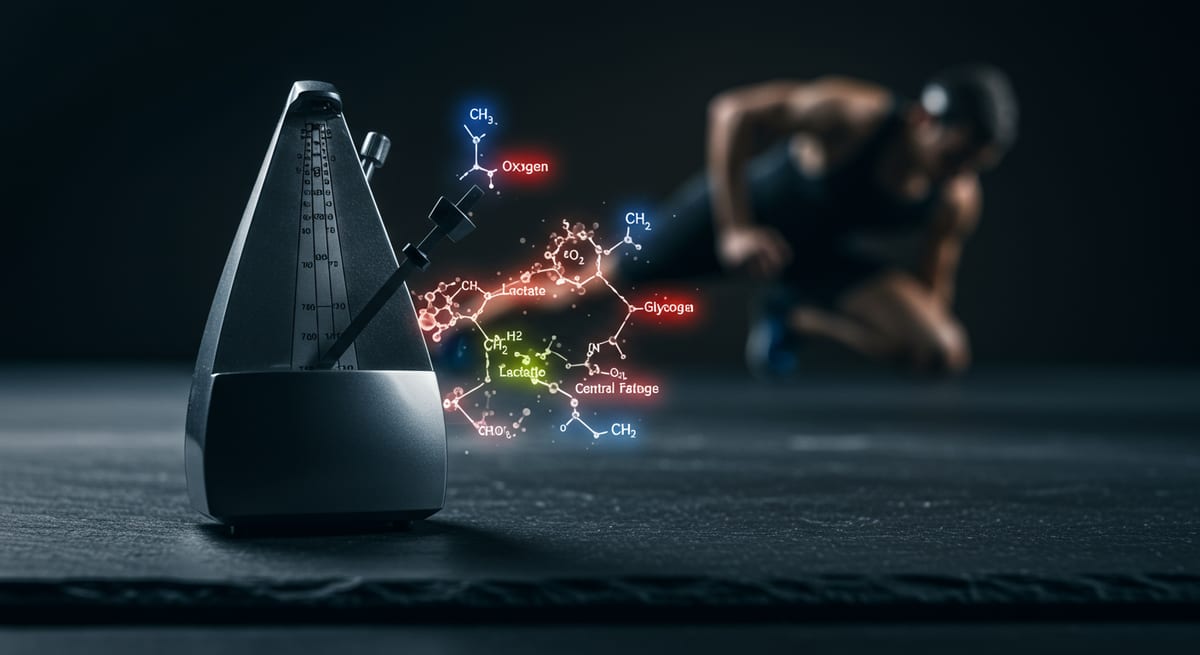
Endurance stamina is limited by four interacting systems: oxygen delivery (VO2 max and cardiac output), lactate buffering (how long you can hold threshold pace), glycogen availability (typically depleting in 90 to 120 minutes at moderate intensity), and central nervous-system fatigue (perceived effort governed by the brain). The bottleneck shifts with event length and intensity. Short events are oxygen-limited, long events are fuel- and CNS-limited, and threshold efforts hit lactate first.
The Ultimate
VO2 Max Stack
- Acute Nitric Oxide Vasodilation
- Chronic Lactic Acid Buffering
- Stimulant Free, cGMP Certified Manufacturing

What Limits the Stamina of Endurance Athletes?
Endurance stamina is limited by four interacting systems: oxygen delivery (VO2 max and cardiac output), lactate buffering (how long you can hold threshold pace), glycogen availability (typically depleting in 90 to 120 minutes at moderate intensity), and central nervous system fatigue (perceived effort governed by the brain). The bottleneck shifts with event length: short events are oxygen-limited, long events are fuel and CNS-limited, and threshold efforts hit lactate first.
Every endurance performance eventually runs into one of four physiological walls. Knowing which wall you are most likely to hit in a given event, and training that specific system, is more productive than generic "build endurance" training.
| Limiting System | What It Governs | Typical Onset | Event Type Most Affected |
|---|---|---|---|
| Oxygen delivery | VO2 max, cardiac output, oxygen economy | Immediate, scales with intensity | Short, high-intensity efforts (5K, threshold intervals) |
| Lactate buffering | How long you hold pace above threshold | Minutes at high intensity | Threshold to half marathon length efforts |
| Glycogen availability | Fuel for sustained muscle contraction | 90 to 120 minutes at moderate intensity | Marathon, century rides, multi-hour events |
| Central nervous system fatigue | Perceived effort, motivation, pacing judgment | Hours, compounds with duration | Ultra-distance, multi-day, extreme heat |
Oxygen Delivery: The First Wall in Short, Hard Efforts
Oxygen delivery is governed by VO2 max (the ceiling on how much oxygen your body can use per minute) and cardiac output (how much blood your heart pumps per beat). In short, high-intensity efforts, athletes hit this wall first: the muscles demand more oxygen than the cardiovascular system can deliver, forcing a shift to anaerobic metabolism.
Heart rate, blood circulation, and oxygen delivery to the muscles all play a critical role in performance at these intensities. Improving VO2 max and stroke volume through structured high-intensity training raises this ceiling directly. Dietary nitrate improves oxygen economy at the muscle level rather than raising VO2 max itself, lowering the oxygen cost of a given pace; see how nitric oxide improves oxygen delivery for the mechanism.
LIMITER_DIAGNOSTIC
What Breaks First in Your Races?
Pick the failure mode you know best:
Lactate Buffering: The Wall at Threshold Pace
Lactate buffering capacity determines how long you can hold pace at or above your lactate threshold before the burn forces you to back off. The main physiological driver of a high lactate threshold is mitochondrial density in trained skeletal muscle, which increases in response to training.
This is the wall that decides efforts from threshold length up to a half marathon. Beta-alanine specifically targets this system by raising muscle carnosine, which buffers the acid byproducts of high-intensity effort. Find your personal threshold pace with the threshold zones calculator.
Glycogen Availability: The Wall in Long Events
Glycogen stores typically deplete within 90 to 120 minutes of continuous moderate-to-hard effort unless actively replaced through fueling. This is the dominant limiter in marathons, century rides, and any event lasting more than about two hours, which is why fueling strategy matters more than fitness alone once an event crosses that duration.
Once glycogen runs low, pace collapses regardless of cardiovascular fitness, the classic marathon wall at mile 20. Actively fueling with 60 to 90 g of carbohydrate per hour delays this wall; see the carb fueling plan calculator for a personalized in-race fueling target.
Central Nervous System Fatigue: The Wall in Ultra-Distance Events
Central nervous system fatigue is governed by the brain's perception of effort rather than a hard physical limit, and it compounds with event duration, becoming the dominant limiter in ultra-distance and multi-day events. Mental fatigue measurably increases perceived effort at a fixed power output, and factors like motivation, mental preparation, and caffeine intake shift where this ceiling sits.
Mental fatigue increases adenosine concentration in the brain, which lowers dopamine availability, while caffeine and other stimulants can counteract that shift and blunt the perceived-effort penalty. This is why caffeine timing strategy becomes more valuable the longer an event runs; see the caffeine timing tool.
Training Around Each Limiter
Each of the four limiters responds to a different training stimulus: oxygen delivery improves with VO2 max intervals, lactate buffering improves with threshold work and beta-alanine loading, glycogen availability improves with fueling practice and carbohydrate periodization, and CNS fatigue improves with long-duration training exposure and mental preparation. Training the wrong system for your event length wastes training time.
- Short, high-intensity events: prioritize VO2 max intervals and oxygen economy (dietary nitrate).
- Threshold-length events: prioritize lactate buffering work and beta-alanine loading.
- Marathon-to-century events: prioritize fueling practice and glycogen periodization.
- Ultra and multi-day events: prioritize long-duration training exposure and mental preparation alongside the physical work.
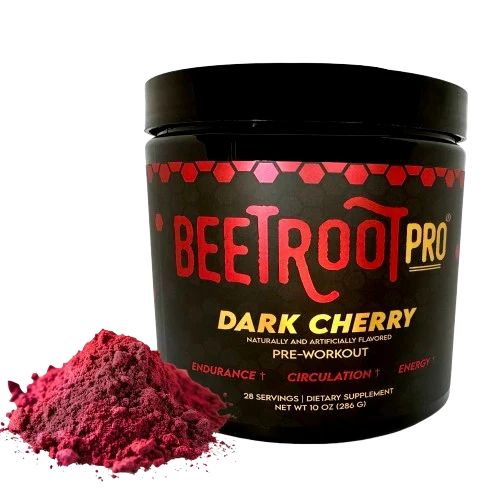
Beetroot Pro® addresses the oxygen-delivery limiter through improved oxygen economy, and pairs with Endurance360®'s beta-alanine for the lactate-buffering limiter, a combination built for events that cross more than one of these four walls.
The Bottom Line
The bottleneck that ends your race is rarely generic "fitness," it is one of four specific systems: oxygen delivery, lactate buffering, glycogen availability, or central nervous system fatigue. Match your training and your race-day fueling and supplementation strategy to whichever wall your event actually hits first, and you train the limiter that matters instead of the one that is easiest to train.
It is recommended to consult with a healthcare professional before taking any dietary supplement, especially if you have any medical condition, are pregnant, are breastfeeding, or are on any medication.
FDA Disclaimer: These statements have not been evaluated by the Food and Drug Administration. This product is not intended to diagnose, treat, cure, or prevent any disease.
Maximize your results: Learn how to stack your nutrition for peak performance in our VO2 Max Supplements Guide.
Technical FAQ Extension
What actually limits an endurance athlete's stamina?
Stamina is limited by physical, psychological, and lifestyle factors. Physically, the cardiovascular system (heart rate, blood circulation, oxygen delivery), the respiratory system (lung capacity and breathing efficiency), and muscle energy metabolism (including lactic acid build-up) all set limits. Psychological factors like mental fatigue and lifestyle factors like diet, hydration, sleep, and stress also reduce stamina.
Does being mentally tired make endurance exercise feel harder?
Yes. Research cited in the post found that when mentally fatigued, athletes perceive endurance exercise as more effortful despite a similar objective power output. Mental fatigue raises adenosine in the brain, which lowers dopamine; caffeine and other substances can shift that neurotransmitter balance and counteract some effects. Visualization, positive self-talk, and mental preparation can also improve mental toughness and stamina.
What training methods help improve stamina?
The post highlights four techniques: interval training (HIIT), which alternates intense work with rest to train the body to sustain high intensity longer; cross-training across activities like swimming, cycling, or weightlifting to work different muscle groups and energy systems; strength training to build muscular endurance; and mental training. Recovery matters too, including taking a rest day after a hard training day.
Continue reading
Related Articles
Apr 13, 2026
Why Endurance Athletes Need More Carbohydrate
Carbohydrate is the limiting fuel for endurance. Why glycogen runs the show, grams per hour by duration, and how to train your gut to take more.

Jun 2, 2026
Best Supplements for Energy in Endurance Athletes
The best energy supplements for endurance athletes: dietary nitrate, caffeine, creatine, and beta-alanine. Different mechanisms that stack cleanly.

May 17, 2026
Sodium Calculator for Endurance Athletes (Free Tool)
Sweat sodium varies 3 to 4x across athletes. A free sodium calculator that sets an hourly target from your body, sweat history, and race-day climate.
The Ultimate
VO2 Max Stack
- Acute Nitric Oxide Vasodilation
- Chronic Lactic Acid Buffering
- Stimulant Free, cGMP Certified Manufacturing
*Technical citations and PubMed references are provided for performance education only. These statements have not been evaluated by the FDA.