
How to Get Rid of Lactic Acid in Muscles: The Short Answer
The muscle burn during hard exercise is caused by hydrogen ions, not lactic acid, and lactate itself clears from the blood within about an hour after you stop. There is no supplement or stretch that drains it faster in any meaningful way. The real lever is your lactate threshold, the intensity at which lactate starts accumulating faster than you can clear it, and that is trained and, to a lesser extent, supplemented (beta-alanine has the best evidence). Active recovery clears lactate modestly faster than sitting still; passive rest is not a mistake.
Every athlete has felt it: the deep, spreading burn in the legs during a hard climb, a fast finish, or the last interval of a set. Most people call it lactic acid buildup and assume the fix is to flush it out faster. That framing is mostly wrong, and it points you at the wrong solutions. Here is what is actually happening, what genuinely helps, and what does not.
What actually causes the muscle burn?
The burn during hard exercise is caused primarily by hydrogen ions accumulating in muscle tissue, not by lactic acid itself. Lactate (the ion form your body actually produces) is not an acid and is not a waste product; it is a fuel your muscles and heart can burn, and a signal that tells your body to adapt. The old "lactic acid is toxic waste" model has been out of date in exercise science for over two decades.
Here is the mechanism in short: as effort intensity rises, your muscles shift toward anaerobic glycolysis for fast energy. That process produces lactate and hydrogen ions together. The hydrogen ions lower muscle pH and interfere with the contraction machinery, which is what you actually feel as burning and heaviness. Lactate gets unfairly blamed because it rises alongside the H+ ions, but it is not the cause of the discomfort, and clearing lactate faster does not directly clear the H+ ions that are.
How do you get lactic acid out of your legs faster?
Lactate clears from the blood within roughly 30 to 60 minutes after you stop exercising, mostly on its own, through the liver (converted back to glucose) and through oxidation as fuel in the heart and other muscles. Light active movement modestly speeds that clearance compared to sitting completely still, but no stretch, massage, or supplement produces a dramatic, measurable acceleration beyond that natural timeline.
If you are looking for the fastest practical way to feel better between hard efforts or after a session, do this in order of actual evidence:
- Active recovery. A few minutes of easy spinning or jogging after a hard effort clears lactate modestly faster than standing or sitting still, because continued light movement keeps blood flow elevated through working muscle.
- Rehydrate and refuel. Dehydration and depleted glycogen both make the next effort feel worse, which gets misattributed to "leftover lactic acid" from the prior one.
- Do not chase gimmicks. Foam rolling, ice baths, and compression sleeves may help with soreness and perceived recovery, but none of them meaningfully accelerates lactate clearance beyond what light movement already does.
The bigger mistake is optimizing for clearance at all. Lactate is gone within the hour regardless of what you do. The intensity at which you started producing it faster than you could use it, your lactate threshold, is the number that actually determines performance.
What is anaerobic threshold, and why does it matter more?
Anaerobic threshold (also called lactate threshold) is the exercise intensity at which lactate production outpaces your ability to clear and use it, causing it to accumulate in the blood. It is the single best predictor of sustainable race pace for events over roughly 20 minutes, and it is a trainable, measurable number, unlike "clearing lactic acid," which is not really a lever at all.
A higher lactate threshold means you can hold a faster pace or higher power output before the burn sets in and forces you to slow down. Two things move that number: training (specifically, threshold and tempo work, which is the primary driver) and, to a smaller but real degree, supplementation that raises your muscles' buffering capacity so they tolerate more hydrogen ion accumulation before pace drops. Age works against you here: lactate threshold declines roughly 1 to 1.5% per year without targeted training, which is the actual mechanism behind why endurance athletes report the burn hitting earlier as they get older.
Which supplements actually move the needle?
Beta-alanine has the strongest human evidence for raising muscle buffering capacity, working by increasing intramuscular carnosine over 10 or more days of daily loading. Sodium bicarbonate and dietary nitrate work through separate mechanisms with their own tradeoffs. Products built around raising blood lactate acutely, like SportLegs, have the weakest evidence of the group: the one controlled trial that tested that specific mechanism found no performance benefit.
We cover the three real buffering options, bicarbonate, beta-alanine, and exogenous lactate, in detail in Lactate vs Bicarbonate vs Beta-Alanine, including dosing and which fits which event. If you are specifically comparing an acute lactate-raising product against a beta-alanine loading protocol, see our full breakdown in the SportLegs alternative comparison, which includes the citation for that null-result trial.
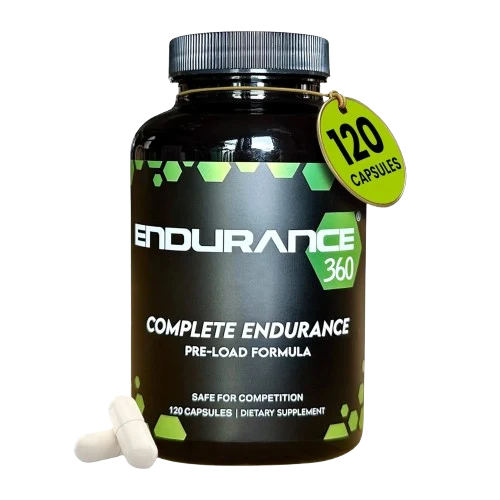
Complete
Endurance 360
- Chronic Lactic Acid Buffering
- ATP & Cellular Saturation
- Cordyceps & Adaptogen Matrix
Frequently asked questions
Does stretching get rid of lactic acid? No. Stretching does not meaningfully accelerate lactate clearance. It may reduce perceived stiffness, but the mechanism is unrelated to lactate levels, which clear on their own within about an hour regardless.
Is lactic acid the same thing as lactate? Not quite. Lactate is the ion your muscles actually produce and can use as fuel. "Lactic acid" is the older, less precise term, and the popular idea of lactic acid as a toxic waste product causing next-day soreness is outdated; delayed-onset muscle soreness has a different mechanism (micro-damage to muscle fibers, not lactate).
Can a supplement clear lactic acid faster? Not in any way that has shown up reliably in controlled trials. The more useful supplement question is not "what clears lactate faster" but "what raises the threshold at which I start accumulating it," which is where beta-alanine has real evidence.
How is anaerobic threshold measured? The gold standard is a lab lactate test with a graded exercise protocol and blood draws. Field estimates from a 20 or 30-minute time trial, or a threshold heart rate/pace test, get you a workable number without a lab. Our threshold calculator above walks through the field-test method.
Related reading
Technical FAQ Extension
Does stretching get rid of lactic acid?
No. Stretching does not meaningfully accelerate lactate clearance. It may reduce perceived stiffness, but the mechanism is unrelated to lactate levels, which clear on their own within about an hour regardless.
Is lactic acid the same thing as lactate?
Not quite. Lactate is the ion your muscles actually produce and can use as fuel. "Lactic acid" is the older, less precise term, and the popular idea of lactic acid as a toxic waste product causing next-day soreness is outdated; delayed-onset muscle soreness has a different mechanism (micro-damage to muscle fibers, not lactate).
Can a supplement clear lactic acid faster?
Not in any way that has shown up reliably in controlled trials. The more useful supplement question is not "what clears lactate faster" but "what raises the threshold at which I start accumulating it," which is where beta-alanine has real evidence.
How is anaerobic threshold measured?
The gold standard is a lab lactate test with a graded exercise protocol and blood draws. Field estimates from a 20 or 30-minute time trial, or a threshold heart rate/pace test, get you a workable number without a lab.
Continue reading
Related Articles
Apr 13, 2026
Beta-Alanine for Endurance Athletes: Lactic Acid Buffering
How beta-alanine raises muscle carnosine to buffer lactic acid, lift threshold, and delay the burn for endurance athletes. Dose, timing, and the tingling.

Aug 12, 2026
The 3am Charley Horse: Why Your Legs Seize at Night
A charley horse at night usually means a tired, misfiring muscle, not dehydration. What causes it, when to worry, and what actually stops the 3am seize.
Jul 16, 2026
Creatine and Brain Fog: What the Research Shows
Creatine's cognitive effect is real but narrow: modest in rested adults, larger in the sleep-deprived, vegetarians, and menopausal women.
*Technical citations and PubMed references are provided for performance education only. These statements have not been evaluated by the FDA.